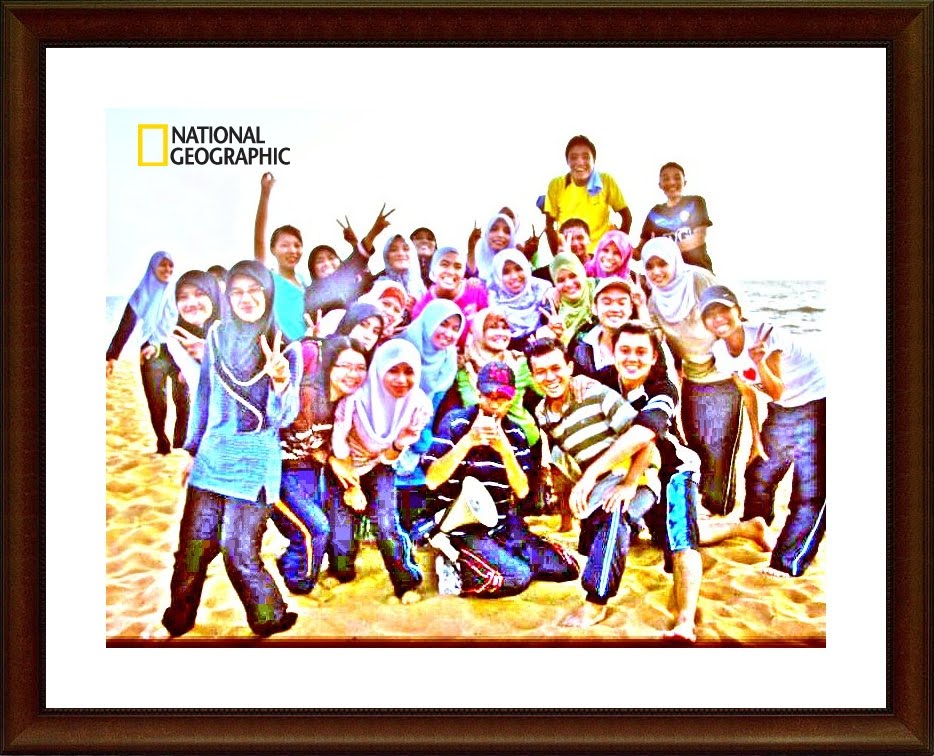
Sumber: Fadzli Abu Bakar.blogspot
Saya tertarik dengan sebuah rencana dari akhbar Mingguan Malaysia pada 24 Oktober 2010 yang ditulis oleh Hafizahril Ahmad. Saya kongsikan rencana tersebut di sini untuk kita hayati bersama...
"RAMAI yang beranggapan ilmu adalah kunci kejayaan dalam hidup. Telah terbentuk dalam pemikiran hampir semua kita untuk berjaya mesti belajar sampai ke universiti. Setelah menamatkan pengajian maka hidup mereka akan lebih terjamin dan masa depan yang lebih gemilang menanti untuk diterokai.
Oleh sebab itu kita tidak boleh salahkan sesiapa waima ibu bapa jika mereka menuntut anak-anak mereka supaya menamatkan pengajian.
Namun sehingga sekarang ramai yang masih keliru dengan apa yang dimaksudkan dengan ilmu. Apakah sekadar menamatkan pengajian sudah cukup untuk mendabik dada bahawa diri mereka sudah terlalu bijak dan berjaya.
Ramai juga yang masih terumbang ambing setelah menamatkan pengajian sama ada dalam mencari pekerjaan, membina kerjaya mahupun mencari matlamat hidup.
Sesungguhnya ilmu yang diperoleh ketika di universiti adalah sekadar landasan kukuh untuk menempa hidup yang lebih baik namun tidak semestinya ia mampu melakar yang terbaik.
Sementelah pengalaman hidup yang diperoleh sama ada melalui kejayaan mahupun kegagalan adalah ilmu paling baik pernah diterima manusia dalam membentuk diri menjadi lebih sempurna.
Jika tidak kenapa begitu ramai manusia yang berjaya malah ada yang sehingga menjadi antara manusia terkaya dunia sebenarnya tidak menamatkan pengajian di peringkat universiti mahupun sekolah menengah.
Lihat saja barisan manusia terkaya dunia ramai di antara mereka sebenarnya tidak menamatkan pengajian atau persekolahan seperti mana yang dilalui oleh Bill Gates, Steve Jobs, Richard Branson. Keadaan ini juga berlaku kepada mereka yang lebih senior seperti Walt Disney, Henry Ford, Ingvar Kamprad atau generasi muda sekarang seperti Mark Zuckerberg, dan beberapa nama lagi.
Melihat kepada barisan generasi yang menempa nama dalam dunia perniagaan sehingga ada yang bergelar bilionair, pastinya kisah bagaimana mereka bermula adalah sesuatu yang menarik untuk diperkatakan.
Apatah lagi mereka ini bermula tanpa sebarang sijil ditangan malah "hanyut" ketika disekolah lagi.
Generasi terawal ini seperti Walt Disney, Henry Ford mahupun taikun perjudian Malaysia, mendiang Tan Sri Lim Goh Tong semuanya memiliki satu persamaan tidak menamatkan persekolahan atas faktor kemiskinan.
Melihat kepada apa yang berlaku kepada Henry Ford yang menawan dunia dengan penciptaan kereta murah Model T, beliau sememangnya mencipta kejayaan dari bawah.
Tidak menamatkan persekolahan apabila mencecah usia 16 tahun, lelaki yang dilahirkan pada 30 Julai 1863, kemudian bekerja sebagai jurumesin dan sebelum berhijrah menjadi mekanik yang pakar dalam enjin stim.
Beliau membuktikan tanpa pelajaran yang tinggi namun berjaya menjadi jurutera di Edison Illuminating Company yang dimiliki oleh pencipta terkenal, Thomas Edison.
Dengan sokongan kewangan dari beberapa jutawan seperti Alexander Y. Malcomson, John dan Horace E. Dodge Ford mula membina model kereta Ford 999. Namun impak besar mula dirasai setelah Model T dikeluarkan pada 1908.
Kejayaan yang dicipta oleh beliau ini juga mencatat sejarah bermulanya pengeluaran kereta secara besar-besaran. Ini kemudian membolehkan beliau menjadi antara bilionair terawal dunia sebelum kematiannya pada 1947 dengan aset dan wang tunai mencecah AS$188.1 bilion (RM601 bilion), jumlah berdasarkan tahun 2008.
Begitu juga kisah yang berlaku pada pengarah, penerbit dan pengasas taman tema Disneyland, Walter Elias "Walt" Disney yang tidak menamatkan sekolah apabila mencecah usia 16 tahun.
Bagi lelaki yang mempunyai susur galur dari Ireland ini, kejayaan yang diraih tidak mengubah imej dan karakter beliau yang senantiasa merendah diri.
Sebaik berhenti sekolah beliau mendaftarkan diri untuk menjadi tentera namun ditolak kerana bawah umur dan kemudian bekerja sebagai pemandu ambulans di Palang Merah.
Bankrap
Disney memulakan karier dalam bidang perfileman terutama dalam industri kartun dan animasi dari bawah. Bermula sebagai pelukis kartun untuk majalah dan suratkhabar, syarikat pengiklanan, malah pernah jatuh bankrap kerana gagal mengurus kewangan syarikat animasi miliknya Laugh-O-Gram Studio dengan baik.
Namun pengalaman yang dilalui ketika susah menjadi ilmu paling berharga sehingga membolehkan empayar perniagaannya berkembang seperti mana yang kita lihat sekarang.
Disney kemudiannya mencipta nama di Hoolywood melalui pelbagai animasi yang mencuit selera penonton antaranya Mickey Mouse, Snow White, Donald Duck dan pelbagai lagi.
Meneruskan legasi jutawan yang tidak menamatkan pendidikan, antara yang paling paling menonjol dalam generasi seterusnya adalah pengasas syarikat IKEA, Ingvar Kamprad.
Beliau yang kini berusia 84 tahun memulakan perniagaan pada usia muda dengan menjual pelbagai barangan yang dibeli pada harga yang murah kepada kenalan dan ahli keluarga.
Selepas berhenti sekolah pada usia 17 tahun, beliau telah membuka IKEA dengan pemberian wang oleh bapanya berikutan keputusan cemerlang dalam peperiksaan.
Pada awalnya perniagaan tersebut telah menjual pelbagai barangan namun kemudian bertumpu kepada perabot sejak 1947.
Nama IKEA yang diambil dari cantuman namanya IK- Ingvar Kampard dan E-Elmtaryd nama ladang ketika kecil dan A-Agunnaryd, nama perkampungan asalnya, telah memberi tuah kepadanya sehingga membolehkan beliau menduduki tempat ke 11 orang terkaya dunia dengan aset sebanyak AS$23 bilion (RM73.6 bilion).
Begitu juga beberapa nama dari Asia seperti Li Ka-shing yang kini menduduki tempat ke 14 terkaya dunia.
Merantau pada usia yang muda ke Hong Kong walaupun dilahirkan di Guangdong, China, kemudian kematian bapa ketika berusia 15 tahun telah memaksa beliau berhenti sekolah dan bekerja di sebuah kilang plastik.
Hasil dari kepayahan hidup telah memberi beliau pengalaman luas dan kemudian memulakan perniagaan pertama, Cheung Kong Industri pada 1950 dalam bidang barangan plastik sebelum berkembang dalam pelbagai industri lain seperti hartanah, tenaga, telekomunikasi dan pelbagai lagi.
Bagi generasi seterusnya nama-nama mereka yang tercicir ketika pengajian tidak lagi perlu diperkenalkan. Antaranya Bill Gates dan rakannya Paul Allen yang berhenti belajar di Harvard untuk menumpukan perhatian dalam pembangunan perisian komputer pada 1975.
Pada tahun yang sama beliau menubuhkan Micro-soft dan kini syarikat tersebut telah membantu beliau menjadi antara orang paling kaya di dunia.
Membina
Begitu juga yang berlaku kepada seorang lagi tokoh industri teknologi maklumat Steve Jobs. Pada penghujung 1970-an, Jobs, dengan pengasas bersama Apple Steve Wozniak dan Mike Markkula telah mereka bentuk, membina dan memasarkan komputer peribadi pertama di dunia.
Setelah keluar dari Apple pada 1985 akibat perebutan kuasa dan masuk kembali pada 1996, beliau kini membuktikan tindakan meninggalkan pengajiannya satu ketika dahulu telah berjaya membuahkan hasil yang sangat lumayan.
Begitu juga yang berlaku kepada pengasas Virgin Records, Richard Branson. Walaupun bapa dan datuknya merupakan hakim-hakim terkenal dan berpengaruh di England namun jejak itu tidak terdapat pada Branson.
Beliau menamatkan persekolahan pada usia 16 tahun dan kemudian menerbitkan majalah Student sebelum membuka syarikat rakaman Virgin Records pada 1982.
Jenama Virgin semakin mengembang pada 1980-an dengan tertubuhnya Virgin Atlantic Air dan kini sudah mula terlibat dalam pelancongan ke angkasa lepas untuk masa depan.
Bagi generasi yang lebih muda mungkin mereka mengagumi pemuda seperti Mark Zuckerberg yang kini menakluk dunia melalui facebook.
Beliau yang hanya berusia 26 tahun juga tidak menamatkan pengajian di Harvard kerana mahu mengembangkan potensi facebook.
Facebook mula diperkenalkan dari bilik asrama Zuckerberg ketika menuntut di Universiti Harvard pada Februari 2004 sebelum ia tersebar ke universiti dan kolej-kolej lain seperti Stanford, Dartmouth, Columbia, New York University, Cornell, Brown dan Yale.
Melihat kepada kejayaan yang diperoleh kesemua tokoh yang dinyatakan, pastinya kejayaan mereka berlandaskan kepada kesungguhan usaha, kreativiti, sifat percaya kepada kebolehan dan keupayaan diri.
Mungkin ada yang berpandangan selepas ini tidak perlu lagi untuk belajar tinggi kerana semua orang boleh berjaya. Namun kita perlu bertanya balik dari berbilion penduduk dunia hanya beberapa kerat sahaja yang terpilih untuk berjaya tanpa pelajaran tinggi.
Mungkin satu ketika dulu akibat kemiskinan telah memaksa mereka ini berhenti belajar dan kemudian bekerja untuk menyara hidup.
Langsung tidak terlintas dalam fikiran Henry Ford dan Walt Disney bahawa mereka akan menjadi begitu berjaya.
Apa yang berlaku kepada mereka ini akibat minat yang begitu mendalam dalam bidang yang mereka minati, membuka ruang untuk ia dieksploitasi hingga ke tahap maksimum dan akhirnya membuahkan hasil yang lumayan.
Mungkin jika kita sudah mengenalpasti minat dan kecenderungan yang boleh membuahkan hasil agak logik juga untuk berhenti belajar.
Tapi jika hanya sekadar mahu berhenti sebab malas dan kemudian berangan-angan untuk menjadi kaya pasti itu satu tindakan paling bodoh yang seseorang lakukan dalam hidupnya."

motivation theory for consultation
McClelland's Theory of Needs
In his acquired-needs theory, David McClelland proposed that an individual's specific needs are acquired over time and are shaped by one's life experiences. Most of these needs can be classed as either achievement, affiliation, or power. A person's motivation and effectiveness in certain job functions are influenced by these three needs. McClelland's theory sometimes is referred to as the three need theory or as the learned needs theory.
Achievement
People with a high need for achievement (nAch) seek to excel and thus tend to avoid both low-risk and high-risk situations. Achievers avoid low-risk situations because the easily attained success is not a genuine achievement. In high-risk projects, achievers see the outcome as one of chance rather than one's own effort. High nAch individuals prefer work that has a moderate probability of success, ideally a 50% chance. Achievers need regular feedback in order to monitor the progress of their acheivements. They prefer either to work alone or with other high achievers.
Affiliation
Those with a high need for affiliation (nAff) need harmonious relationships with other people and need to feel accepted by other people. They tend to conform to the norms of their work group. High nAff individuals prefer work that provides significant personal interaction. They perform well in customer service and client interaction situations.
Power
A person's need for power (nPow) can be one of two types - personal and institutional. Those who need personal power want to direct others, and this need often is perceived as undesirable. Persons who need institutional power (also known as social power) want to organize the efforts of others to further the goals of the organization. Managers with a high need for institutional power tend to be more effective than those with a high need for personal power.
Thematic Apperception Test
McClelland used the Thematic Apperception Test (TAT) as a tool to measure the individual needs of different people. The TAT is a test of imagination that presents the subject with a series of ambiguous pictures, and the subject is asked to develop a spontaneous story for each picture. The assumption is that the subject will project his or her own needs into the story.
Psychologists have developed fairly reliable scoring techniques for the Thematic Apperception Test. The test determines the individual's score for each of the needs of achievement, affiliation, and power. This score can be used to suggest the types of jobs for which the person might be well suited.
Implications for Management
People with different needs are motivated differently.
*
High need for achievement - High achievers should be given challenging projects with reachable goals. They should be provided frequent feedback. While money is not an important motivator, it is an effective form of feedback.
*
High need for affiliation - Employees with a high affiliation need perform best in a cooperative environment.
*
High need for power - Management should provide power seekers the opportunity to manage others.
Note that McClelland's theory allows for the shaping of a person's needs; training programs can be used to modify one's need profile.
Expectancy theory (vroom)
...assumes that behavior results from conscious choices among alternatives whose purpose it is to maximize pleasure and minimize pain. Together with Edward Lawler and Lyman Porter, Victor Vroom suggested that the relationship between people's behavior at work and their goals was not as simple as was first imagined by other scientists. Vroom realized that an employee's performance is based on individuals factors such as personality, skills, knowledge, experience and abilities.
The theory suggests that although individuals may have different sets of goals, they can be motivated if they believe that:
* There is a positive correlation between efforts and performance,
* Favorable performance will result in a desirable reward,
* The rewardwill satisfy an important need,
* The desire to satisfy the need is strong enough to make the effort worthwhile.
The theory is based upon the following beliefs:
Valence
Valence refers to the emotional orientations people hold with respect to outcomes [rewards]. The depth of the want of an employee for extrinsic [money, promotion, time-off, benefits] or intrinsic [satisfaction] rewards). Management must discover what employees value.
Expectancy
Employees have different expectations and levels of confidence about what they are capable of doing. Management must discover what resources, training, or supervision employees need.
Instrumentality
The perception of employees as to whether they will actually get what they desire even if it has been promised by a manager. Management must ensure that promises of rewards are fulfilled and that employees are aware of that.
Vroom suggests that an employee's beliefs about Expectancy, Instrumentality, and Valence interact psychologically to create a motivational force such that the employee acts in ways that bring pleasure and avoid pain.
Herzberg's Motivation-Hygiene Theory (Two Factor Theory)
To better understand employee attitudes and motivation, Frederick Herzberg performed studies to determine which factors in an employee's work environment caused satisfaction or dissatisfaction. He published his findings in the 1959 book The Motivation to Work.
The studies included interviews in which employees where asked what pleased and displeased them about their work. Herzberg found that the factors causing job satisfaction (and presumably motivation) were different from those causing job dissatisfaction. He developed the motivation-hygiene theory to explain these results. He called the satisfiers motivators and the dissatisfiers hygiene factors, using the term "hygiene" in the sense that they are considered maintenance factors that are necessary to avoid dissatisfaction but that by themselves do not provide satisfaction.
The following table presents the top six factors causing dissatisfaction and the top six factors causing satisfaction, listed in the order of higher to lower importance.
Factors Affecting Job Attitudes
Leading to Dissatisfaction
Leading to Satisfaction
*
Company policy
*
Supervision
*
Relationship w/Boss
*
Work conditions
*
Salary
*
Relationship w/Peers
*
Achievement
*
Recognition
*
Work itself
*
Responsibility
*
Advancement
*
Growth
Herzberg reasoned that because the factors causing satisfaction are different from those causing dissatisfaction, the two feelings cannot simply be treated as opposites of one another. The opposite of satisfaction is not dissatisfaction, but rather, no satisfaction. Similarly, the opposite of dissatisfaction is no dissatisfaction.
While at first glance this distinction between the two opposites may sound like a play on words, Herzberg argued that there are two distinct human needs portrayed. First, there are physiological needs that can be fulfilled by money, for example, to purchase food and shelter. Second, there is the psychological need to achieve and grow, and this need is fulfilled by activities that cause one to grow.
From the above table of results, one observes that the factors that determine whether there is dissatisfaction or no dissatisfaction are not part of the work itself, but rather, are external factors. Herzberg often referred to these hygiene factors as "KITA" factors, where KITA is an acronym for Kick In The A..., the process of providing incentives or a threat of punishment to cause someone to do something. Herzberg argues that these provide only short-run success because the motivator factors that determine whether there is satisfaction or no satisfaction are intrinsic to the job itself, and do not result from carrot and stick incentives.
Implications for Management
If the motivation-hygiene theory holds, management not only must provide hygiene factors to avoid employee dissatisfaction, but also must provide factors intrinsic to the work itself in order for employees to be satisfied with their jobs.
Herzberg argued that job enrichment is required for intrinsic motivation, and that it is a continuous management process. According to Herzberg:
*
The job should have sufficient challenge to utilize the full ability of the employee.
*
Employees who demonstrate increasing levels of ability should be given increasing levels of responsibility.
*
If a job cannot be designed to use an employee's full abilities, then the firm should consider automating the task or replacing the employee with one who has a lower level of skill. If a person cannot be fully utilized, then there will be a motivation problem.
Critics of Herzberg's theory argue that the two-factor result is observed because it is natural for people to take credit for satisfaction and to blame dissatisfaction on external factors. Furthermore, job satisfaction does not necessarily imply a high level of motivation or productivity.
Herzberg's theory has been broadly read and despite its weaknesses its enduring value is that it recognizes that true motivation comes from within a person and not from KITA factors.
Douglas mcgregor - theory x y
Douglas McGregor's XY Theory, managing an X Theory boss.
Douglas McGregor, an American social psychologist, proposed his famous X-Y theory in his 1960 book 'The Human Side Of Enterprise'. Theory x and theory y are still referred to commonly in the field of management and motivation, and whilst more recent studies have questioned the rigidity of the model, Mcgregor's X-Y Theory remains a valid basic principle from which to develop positive management style and techniques. McGregor's XY Theory remains central to organizational development, and to improving organizational culture.
McGregor's X-Y theory is a salutary and simple reminder of the natural rules for managing people, which under the pressure of day-to-day business are all too easily forgotten.
McGregor's ideas suggest that there are two fundamental approaches to managing people. Many managers tend towards theory x, and generally get poor results. Enlightened managers use theory y, which produces better performance and results, and allows people to grow and develop.
McGregor's ideas significantly relate to modern understanding of the Psychological Contract, which provides many ways to appreciate the unhelpful nature of X-Theory leadership, and the useful constructive beneficial nature of Y-Theory leadership.
theory x ('authoritarian management' style)
* The average person dislikes work and will avoid it he/she can.
* Therefore most people must be forced with the threat of punishment to work towards organisational objectives.
* The average person prefers to be directed; to avoid responsibility; is relatively unambitious, and wants security above all else.
theory y ('participative management' style)
* Effort in work is as natural as work and play.
* People will apply self-control and self-direction in the pursuit of organisational objectives, without external control or the threat of punishment.
* Commitment to objectives is a function of rewards associated with their achievement.
* People usually accept and often seek responsibility.
* The capacity to use a high degree of imagination, ingenuity and creativity in solving organisational problems is widely, not narrowly, distributed in the population.
* In industry the intellectual potential of the average person is only partly utilised.
characteristics of the x theory manager
Perhaps the most noticeable aspects of McGregor's XY Theory - and the easiest to illustrate - are found in the behaviours of autocratic managers and organizations which use autocratic management styles.
What are the characteristics of a Theory X manager? Typically some, most or all of these:
* results-driven and deadline-driven, to the exclusion of everything else
* intolerant
* issues deadlines and ultimatums
* distant and detached
* aloof and arrogant
* elitist
* short temper
* shouts
* issues instructions, directions, edicts
* issues threats to make people follow instructions
* demands, never asks
* does not participate
* does not team-build
* unconcerned about staff welfare, or morale
* proud, sometimes to the point of self-destruction
* one-way communicator
* poor listener
* fundamentally insecure and possibly neurotic
* anti-social
* vengeful and recriminatory
* does not thank or praise
* withholds rewards, and suppresses pay and remunerations levels
* scrutinises expenditure to the point of false economy
* seeks culprits for failures or shortfalls
* seeks to apportion blame instead of focusing on learning from the experience and preventing recurrence
* does not invite or welcome suggestions
* takes criticism badly and likely to retaliate if from below or peer group
* poor at proper delegating - but believes they delegate well
* thinks giving orders is delegating
* holds on to responsibility but shifts accountability to subordinates
* relatively unconcerned with investing in anything to gain future improvements
* unhappy
how to manage upwards - managing your X theory boss
Working for an X theory boss isn't easy - some extreme X theory managers make extremely unpleasant managers, but there are ways of managing these people upwards. Avoiding confrontation (unless you are genuinely being bullied, which is a different matter) and delivering results are the key tactics.
* Theory X managers (or indeed theory Y managers displaying theory X behaviour) are primarily results oriented - so orientate your your own discussions and dealings with them around results - ie what you can deliver and when.
* Theory X managers are facts and figures oriented - so cut out the incidentals, be able to measure and substantiate anything you say and do for them, especially reporting on results and activities.
* Theory X managers generally don't understand or have an interest in the human issues, so don't try to appeal to their sense of humanity or morality. Set your own objectives to meet their organisational aims and agree these with the managers; be seen to be self-starting, self-motivating, self-disciplined and well-organised - the more the X theory manager sees you are managing yourself and producing results, the less they'll feel the need to do it for you.
* Always deliver your commitments and promises. If you are given an unrealistic task and/or deadline state the reasons why it's not realistic, but be very sure of your ground, don't be negative; be constructive as to how the overall aim can be achieved in a way that you know you can deliver.
* Stand up for yourself, but constructively - avoid confrontation. Never threaten or go over their heads if you are dissatisfied or you'll be in big trouble afterwards and life will be a lot more difficult.
* If an X theory boss tells you how to do things in ways that are not comfortable or right for you, then don't questioning the process, simply confirm the end-result that is required, and check that it's okay to 'streamline the process' or 'get things done more efficiently' if the chance arises - they'll normally agree to this, which effectively gives you control over the 'how', provided you deliver the 'what' and 'when'.
And this is really the essence of managing upwards X theory managers - focus and get agreement on the results and deadlines - if you consistently deliver, you'll increasingly be given more leeway on how you go about the tasks, which amounts to more freedom. Be aware also that many X theory managers are forced to be X theory by the short-term demands of the organisation and their own superiors - an X theory manager is usually someone with their own problems, so try not to give them any more.
See also the article about building self-confidence, and assertiveness techniques.
Theory z - william ouchi
First things first - Theory Z is not a Mcgregor idea and as such is not Mcgregor's extension of his XY theory.
Theory Z was developed by not by Mcgregor, but by William Ouchi, in his book 1981 'Theory Z: How American management can Meet the Japanese Challenge'. William Ouchi is professor of management at UCLA, Los Angeles, and a board member of several large US organisations.
Theory Z is often referred to as the 'Japanese' management style, which is essentially what it is. It's interesting that Ouchi chose to name his model 'Theory Z', which apart from anything else tends to give the impression that it's a Mcgregor idea. One wonders if the idea was not considered strong enough to stand alone with a completely new name... Nevertheless, Theory Z essentially advocates a combination of all that's best about theory Y and modern Japanese management, which places a large amount of freedom and trust with workers, and assumes that workers have a strong loyalty and interest in team-working and the organisation.
Theory Z also places more reliance on the attitude and responsibilities of the workers, whereas Mcgregor's XY theory is mainly focused on management and motivation from the manager's and organisation's perspective. There is no doubt that Ouchi's Theory Z model offers excellent ideas, albeit it lacking the simple elegance of Mcgregor's model, which let's face it, thousands of organisations and managers around the world have still yet to embrace. For this reason, Theory Z may for some be like trying to manage the kitchen at the Ritz before mastering the ability to cook a decent fried breakfast.
12 Hot Career - by Forbes Magazine
From: WWW.afterschool.com
The Forbes magazine recently listed 12 hot careers in years to come. According to them the advances in technology, changes in consumers habits, an aging population and increase in offshore jobs (outsourcing) are factors that contribute to dynamic job markets. Because of this, jobs that are popular one day can quickly become obsolete in the future. This list is done based on their research on the anticipated job openings from the American Department of Labour. So it might not be entirely relevant to us.
Business and Finance
1. Accountants and auditors
2. Financial examiners - people who ensure companies comply with financial-related laws.
3. Personal financial advisors - people who help clients do retirement planning and meet financial objectives. In Malaysia generally, our personal financial advisors start as insurance agents and then they move up by taking a Certified Financial Planner course.
4. General and operations Manager - managers who run the day-to-day operations of a company.
5. Management analyst - also known as management consultants, these are people who advise businesses on how to increase their efficiency. Some well-know management consultants are McKinsey, Boston Consulting Group and Binafikir (home grown).
Education
6. Elementary school teachers - teachers in primary school level. This might not apply to Malaysia but it is interesting to note the recent increase in private schools. We have university colleges like UCSI and UCTI going into the private school business. Also two British boarding schools are headed to Malaysia, Epsom in Enstek, Sepang and Marlborough in Iskandar, Johor.
7. Post-secondary school teachers - academics in colleges and universities. With the number of new universities coming up in Malaysia, this is a new growth career. At our last count we have the following new universities coming to Malaysia within the next few years.
- Newcastle University Medice Malaysia - Iskandar, Johor
- Netherlands Maritime Institute of Technology - Iskandar, Johor
- Southampton University - Iskandar, Johor
- iCarnegie
- Premier International University Perak
- Manipal University
Health Care
8. Nurse - there is a large number of nurses locally but there are ample opportunities overseas.
9. Physician assistant - similar to hospital assistants in Malaysia, physician assistants provide similar health care service as physicians.
10. Medical scientist - the R&D guys in the medical field.
Technology
11. Network systems and data communications specialist - with businesses operating in different geographies, network specialist are important to manage a company's network.
Transportation
12. Truck driver: heavy tractor trailer - the reason why trucking industry is big in USA is because of the size of the country.
7 perkara yang membuat anda bermotivasi di waktu pagi

sumber: iLuvislam (En. Shukri Abdullah)
Malas, lemah, penat, longlai adalah resam jika anda bukanlah berniat dengan penuh kesungguhan dan bersemangat untuk menikmati kebahagiaan di pagi hari.
Waktu pagi adalah ujian untuk anda, pagi adalah nikmat untuk anda, pagi adalah penentu arah kejayaan dan kegagalan dalam hidup anda.
Justeru itu adakah kita mahu mensia-siakannya?
Ayuh sahabat, bangkitlah! Perkara terbaik yang anda patut lakukan di waktu pagi, adalah:
01. Bersyukur, bersyukur, bersyukur
Bersyukurlah sebab anda masih diberi peluang untuk meneruskan hidup, anda juga masih ada kesempatan untuk melakukan yang terbaik hari ini, lebih baik dari yang kelmarin.
02. Tekad Bermotivasi
Pasang niat dalam hati yang anda mahu jadi bersemangat sepenuhnya. Ambil beberapa artikel-artikel motivasi pendek dan baca dalam seminit dua.
Di waktu awal pagi, jangan buka email, baca newspaper, baca gosip-gosip mahupun join sesi mengumpat bersama kawan-kawan. Sebab, ia menerbitkan energi negatif lalu menghalang anda dari bermotivasi sepanjang hari.
03. Dekatkan Diri Dengan Sesi Motivasi
Ikuti sesi-sesi motivasi di media, misalnya Motivasi Pagi di TV3 dan sesi motivasi Dr Izzy di Hot FM. Luangkan masa 3-5 minit memberi motivasi pada diri sendiri melalui sesi-sesi motivasi pendek ni.
Motivasi harus dijaga, sebab kalau tak di jaga ia mudah turun. Kesannya, anda menjadi tidak bersemangat, lemah longlai dan lemas.
04. Dalam Apa Jua Yang Anda Buat, Mulakan Dengan Bismillah
Bila anda mula punch card nak masuk kerja, baca bismillah, moga anda dijauhkan dari bisikan syaitan yang membuat anda lalai, mengantuk, macam tak cukup ‘cas betri’ saja.
Andai kata anda seorang pelajar, bermula dari nak masuk kelas, duduk di kerusi anda dan mula nak bukak buku, mulakan semuanya dengan bismillah. Moga apa jua yang anda lakukan mendapat keberkatan.
Masuk saje ke dalam kelas, pasang niat anda mahu menuntut ilmu. Bila istiqamah melakukannya, anda punya peluang cerah untuk menjadi cemerlang!
05. Set Target Kemajuan Diri Sendiri
Ini juga kurang dititikberatkan. Bila dah keluar rumah sama ada ke kelas atau ke tempat kerja, kita tak tahu apa yang kita nak capai hari tu. Betul tak?
Kita hanya nak sampai di sana, bekerja (atau menghadiri kelas) lepas tu nanti petang balik rumah, berehat, makan, minum, pastu tidur. Esok pagi, bangun dan perkara sama berulang lagi.
Hidup Anda bagai dalam 1 bulatan, situ-situ saja.
Mulai hari ini, ubah sikap anda. Set target apa yang anda mahu capai, lagi best setkan untuk setiap hari.
Andai anda seorang pelajar, set target berapa bab yang anda nak ulangkaji, berapa buah buku yang anda nak baca dalam minggu ni, berapa soalan anda nak bertanya pada lecturer atau guru anda nanti.
Andai anda seorang usahawan, set target berapa jualan yang anda nak capai hari ini dan berapa keuntungan yang anda nak dapat hasil dari bisnes anda. Set juga apa yang anda nak pelajari hari ni dalam bidang bisnes anda.
Andai anda seorang pekerja, set berapa tugas yang anda nak siapkan dan set limit masa untuk anda menyiapkan segalanya. Kecekapan seorang pekerja di nilai dari kepantasan, ketepatan dan kekemasan.
06. Lihat Warna Cerah
Warna boleh mempengaruhi mood. Warna cerah membuat kita jadi energetik, ceria dan penuh dengan idea.
Setiap hari, lihat warna-warna yang cerah seperti kuning, merah, biru dan hijau. Cara ni saya dah test sendiri, berkesan sungguh!
Dekatkan diri dengan benda-benda berwarna cerah sebab ia mampu merubah mood anda menjadi positif.
07. Penuhkan Hati Dengan Kemaafan
Lepaskan segala yang dulu-dulu. Maafkan orang diwaktu pagi, maafkan kesalahan semuanya dari dulu sampai sekarang.
Lepaskan dendam, rasa tak puas hati, geram, sakit hati dan yang sewaktu dengannya.
Andai emosi-emosi negatif ni bersarang di hati (walaupun sedikit) ia menghalang motivasi. Kesannya, anda jadi orang yang tak bersemangat langsung.
Lebih teruk, anda jadi orang yang berfikiran negatif, hanya nampak yang negatif dalam diri setiap orang, setiap situasi dan setiap benda.
Anda mesti berubah untuk kemajuan diri.
Berani Berubah Untuk Kecemerlangan Hidup.
Raya tahun ni
Setelah dua tahun beraya diperantauan, akhirnya saya kembali beraya di kampung halaman yang tercinta..perasaan sungguh teruja bermula seawal puasa yang pertama...2 tahun tidak beraya di kampung sendri bagai sudah lama tidak menyambut hari raya...namun sepanjang 2 tahun itu juga saya mengutip penglaman yang akan disimpan sehingga ke akhir hayat...nasib perantau sebagai pencari ilmu...pelajaran bukan hanya dikutip daripada ilmu pengetahuan yang disampaikan tapi juga melalui pengalaman semasa perjalanan mencarinya..
Sepanjang 2 tahun beraya diperantauan saya dipertemukan dengan 2 buah keluarga yang sudi membenarkan saya menumpang kasih di Aidilfitri...raya semester pertama saya telah beraya di Pulau Pinang iaitu rumah rakan saya Noraini Ahmad....keluarga ini banyak mengajar saya berdikari berada di tengah situasi yang serba baru..layanan santai yang membuatkan saya selesa dan bleh mengikuti setiap aktiviti tanpa berasa kekok...mak Aini merupakan seorang peniaga gigih yang berjaya mengeksport pelbagai jenis kerepek di sekitar Pulau Pinang...setiap kali hendak menyediakan juadah dia pasti akan mengajak saya untuk turut serta memasak sambil menerangkan resepi2 daripada Pulau Pinang....di Hari Raya saya telah menyertai robmbongan keluarga aini beraya di sekitar Pulau Pinang sebagai 'anak angkat tak rasmi"..hu3..boleh katakan semua rumah saudara mara dikunjungi..namun saya tidak pernah tersisih kerana layanan daripada keluarga Aini...hanya terima kasih dan doa yang dapat diberikan...
Raya seterusnya saya beraya di Parit Buntar Perak di rumah my classmate Suriyani Othman...sebenarnya saya ingin mengetahui bgaimana situasi beraya sebagai anak tunggal kerana saya dilahirkkan dalam keluarga yang agak besar..di sana saya hanya beraya bersama mak dengan pak teh (ayah dan mak su) dan su....memang agak berbeza...nampak lebih cool dan tersusun berbanding sambutan raya dlam keluarga saya..saya dilayan seperti anak sendiri...dihadiahkan sepasang baju raya yang dijahit sendiri oleh mak teh...dan di sini saya belajar bagaimana membuat kek coklat yang sunggu simple...tapi sedappp...hu3.
Dan raya kali ini saya sambut di kampung...trip yang sungguh mengujakan...bermula pada 2 hb september...kami bertolak pada pukul 5 petang ke KL selepas ujian EDU..rombongan kami ada 7 orang semuanya...dan semuanya adalah serumah...sampai di KL kami dimaklumkan akan bertolak pada pukul 8 ke LCCT..kami mengambil ruang di tepi-tepi jalan bersebelahan MYDIN untuk berehat dan sungkai...berbuka puasa ala kadar dengan panorama KL..tidak jauh daripada kami terdapat sekumpulan lelaki yang saya rasa pekerja Indonesia..mereka mengajak kami berbuka puasa sama2..namun kami menolak dengan baik kerana memikirkan keselamtan kami... beberapa org yang lalu lalang hanya memandang kami yang duduk bersila di atas jalan raya dengan pelbagai reaksi...
Tepat pukul 8 malam kami bertolak ke LCCT dan terpaksa bertukar bus di pertengahan jalan kerana beberapa masalah..kami tiba di LCCT pada pukul 11 malam dan bermalam di sana..kami mula sahur pada pukul 4 pagi kerana perlu ke balai berlepas lebih awal sblm penerbangan...setelah selesai semua urusan kami melabuhkan diri di balai berlepas...hu3..perjalan yang agak adventure bagi kami...namun Alhamdulillah kami berjaya sampai ke Sabah dengan selamat..
pengalaman ini tidak dapat diperolehi tanpa pengorbanan diri...pengalaman inilah yang mewarnai perjalan hidup hingga ke akhir hayat..kita berupaya mencorak hidup sama ada berseri ataupun kelam, semuanya di tangan kita dan hanya perlu kekuatan diri..bagaimana mendapat kekuatan diri jika kita tidak rela mengorbankan kesenangan?...berkorban sekarang utk masa depan...pengalaman ini juga membantu saya utk lebih bijak dalam mengadaptasi diri di tempat yang baru dan ketika berhadapan dengan ujian hidup...akhir kata Selamat Menyambut Hari Raya Aidilfitri...semoga cahaya kemenangan di Aidilfitri akan megiringi perjalanan hidup kita di dunia dan memberi keberkatan atas semua usaha yang dilaksanakan....ampunmaaf dipinta dari nur hatimu yang murni atas keizinanNYA...maaf zahir dan batin...


“BEYOND THE LIMIT FIRST CLASS STUDENT”
Pada kali ini saya bersama 8 orang rakan yang lain telah mengadakan program “BEYOND THE LIMIT FIRST CLASS STUDENT” di Sekolah Menengah Kebangsaan Ampang Pecah pada 21 Ogos 2010 bermula pukul 8 pagi sehingga 12.30 tengah hari.
Sebelum program dijalankan kami telah mengunjungi kaunselor sekolah iaitu pihak yang berurusan dengan kami sepenuhnya untuk mendapatkan beberapa maklumat tentang golongan sasaran yang kami akan kendalikan dan membincangkan tentang kesesuaian tentative dan modul. Walaupun kami berhadap dengan kekangan masa kerana hanya diberi masa selama 4 jam sahaja, namun kami cuba menjalankan aktiviti dengan baik dan dapat melaksanakan semua modul mengikut masa yang telah ditetapkan. Kami juga amat gembira dengan kerjasama yang diberikan oleh para peserta walaupun mereka terdiri daripada pelbagai kaum dan kelas. Program yang dijalankan pada bulan puasa ini, banyak menguji kami dan juga peserta dan Alhamdulillah semuanya dapat menjalankan aktiviti walaupun kelihatan agak letih.
Tidak lupa juga ucapan terima kasih dengan kerjasama yang telah diberikan oleh pihak sekolah kepada kumpulan kami. Saya melihat sepanjang aktiviti dijalankan banyak guru-guru yang datang menjenguk dan kaunselor yang sentiasa berada di dalam dewan untuk memberikan bantuan tiap kali diperlukan. Saya juga rasa gembira dengan kerjasama yang diberikan oleh ahli-ahli kumpulan saya di mana mereka sangat bertungkus lumus untuk menjayakan program ini dan tetap tidak berputus asa walaupun berbagai masalah yang terpaksa kami hadapi.


Program Mengejar Pelangi dan Lailatul Ubudiyyah
Pada 6-8 Ogos yg lalu saya telah berkesempatan untuk meyertai sebuah program Mengejar Pelangi Impian dan Lailatul Ubidiyyah sebagai fasilitator di Sekolah Rendah Arab (JAIM)Batang Tiga Timur Melaka. Peserta terdiri daripada Tahun 4 - Tahun 6. kami bertolak daripada UPSI pada pukul 3 petang dan tiba tepat jam 7 malam di sekolah tersebut. kami disambut oleh beberapa orang guru termasuklah guru besar dan Ketua PIBG. Alhamdulillah, kami amat berterima kasih dengan layanan dan kerjasama yang diberikan oleh pihak sekolah. Bermula daripada kedatangan kami, kami telah disambut dengan baik, kemudahan-kemudahan program yang mencukupi, petempatan yang selesa dan juga makanan yang enak-enak sehinggalah lambaian terakhir mereka semasa kami bertolak balik ke Tanjung Malim.
Para peserta juga memberi kerjasama yang sangat baik walaupun mereka masih kelihatan amat muda untuk berdikari sendiri dengan bantuan guru-guru selama 3 hari 2 malam berkampung di sekolah. Walaupun mereka kelihatan agak letih kerana jadual program yang padat mereka tetap memberikan komitmen yang baik sehingga program berakhir.


Para peserta juga memberi kerjasama yang sangat baik walaupun mereka masih kelihatan amat muda untuk berdikari sendiri dengan bantuan guru-guru selama 3 hari 2 malam berkampung di sekolah. Walaupun mereka kelihatan agak letih kerana jadual program yang padat mereka tetap memberikan komitmen yang baik sehingga program berakhir.


Langgan:
Catatan (Atom)